← Compatibility Index
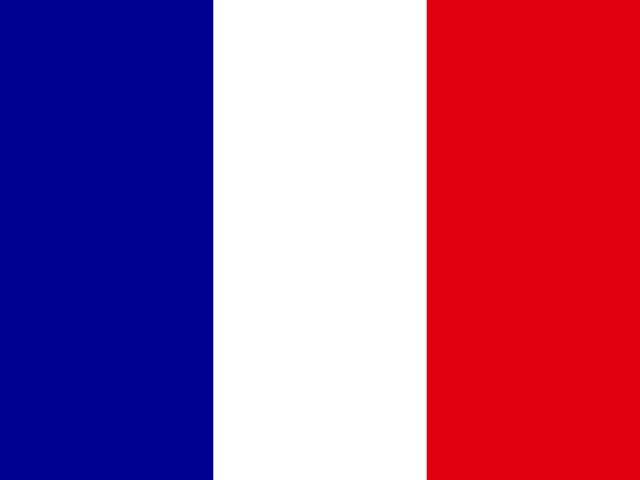 France
Ranked against every country we've compared France to, highest compatibility first.
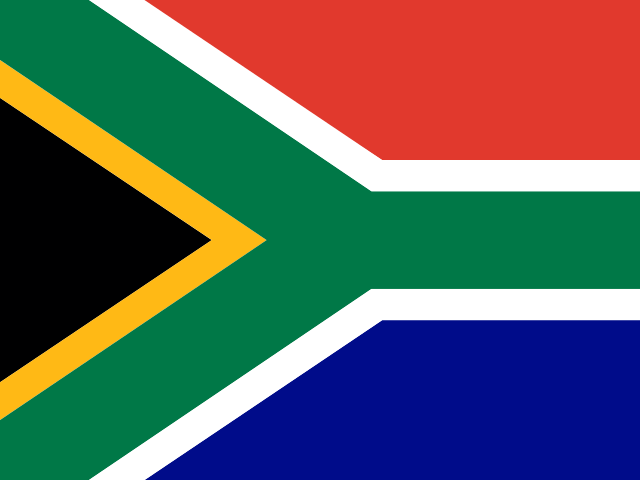
South Africa52/100
“A warm, car-dependent republic of braai invitations meets a cold, escalator-codified republic of withering glances — compatible enough to share a continent of ambition, incompatible enough to ruin each other's dinner party.”
Breakdown & sources
Work-Life Balance58
Both cultures guard their leisure time with religious conviction, though one does it over a six-hour braai and the other does it by simply not answering emails after six and calling it philosophy.
Hierarchy & Formality48
South Africa's kaleidoscopic informality and France's quietly enforced intellectual aristocracy are not enemies, exactly, but they would absolutely judge each other's wine choices.
Communication Style44
South African bluntness and French intellectual depth both value honesty, but one delivers it like a rugby tackle and the other like a seventeen-word subordinate clause.
Punctuality Culture46
A nation that calibrates lateness in 'now now' versus 'just now' and a nation that reads strike calendars like navigational charts are, technically, both managing expectations — just with entirely different instruments.
Social Bonding38
The South African who invites you to a braai within a fortnight and the Frenchman who admits you to his social circle after six months of vetting are both offering genuine warmth, separated only by roughly five months and a serious quality-threshold for rosé.
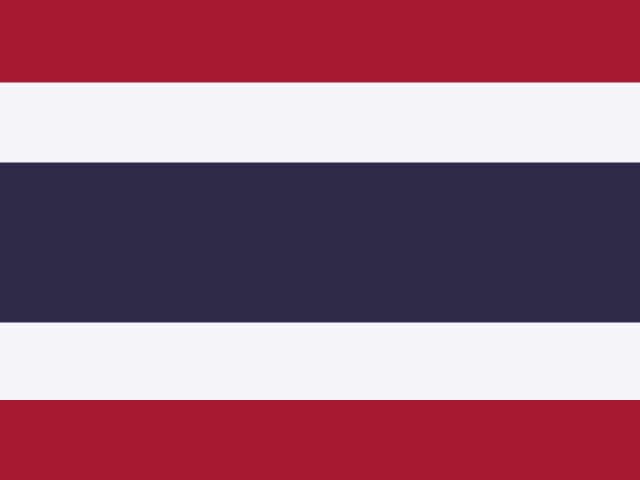
Thailand51/100
“Two nations united by the conviction that the correct opening gesture is everything, and divided by what happens in every moment thereafter.”
Breakdown & sources
Work-Life Balance55
Both cultures treat leisure as non-negotiable, though France defends it through legislation and Thailand through the quiet spiritual logic that urgency is undignified.
Hierarchy & Formality48
France performs equality while practising hierarchy through intellectual credentialism; Thailand makes hierarchy explicit, architectural, and visible in the precise angle of the wai — one system hides its structure, the other displays it proudly.
Communication Style38
The French have perfected the cold, precisely structured complaint as an art form; Thais have perfected the warm, unreadable smile that makes clear no complaint was necessary in the first place.
Punctuality Culture58
Neither nation is fanatical about the clock, which is perhaps the one timezone they comfortably share.
Social Bonding55
Both cultures demand a correct ritual greeting as the price of admission — one requires a word, one requires a gesture — and both will quietly exile you for skipping it.
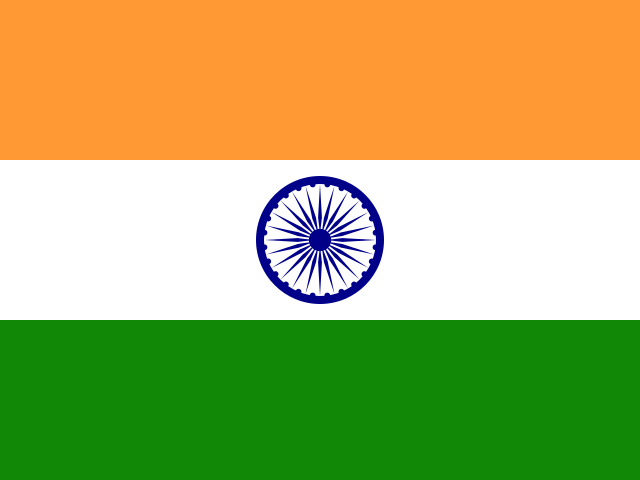
India42/100
“Two civilisations that have both elevated eating and paperwork to spiritual practices, yet somehow manage to do both in ways that are entirely incompatible with each other.”
Breakdown & sources
Work-Life Balance38
France treats the two-hour lunch as a constitutional right; India treats lunch as something that happens between the first and second queue at a government office that closes at 1pm.
Hierarchy & Formality44
France vests absolute power in the guichet clerk who guards procedure like a cathedral; India vests it in the person who knows the person, which is a different religion entirely.
Communication Style35
France communicates important matters exclusively by courrier on paper; India communicates them through Aadhaar-linked infrastructure, WhatsApp, and a man named Suresh who will call you back.
Punctuality Culture41
The French make their préfecture appointment at 8am sharp weeks in advance; Indians are told to come back Tuesday, which both parties understand to mean something in the general region of Tuesday.
Social Bonding52
Both cultures have organised their entire social lives around food with alarming seriousness — the French just require a table, two hours, and mild disapproval of everyone eating at a corner.
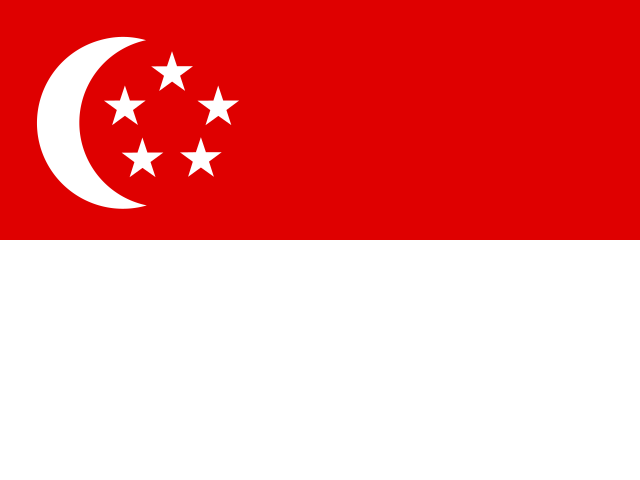
Singapore41/100
“Two nations that have elevated eating to a civic religion discover, upon closer inspection, that they disagree on absolutely everything else about how that religion should be practised.”
Breakdown & sources
Work-Life Balance35
France builds shopping trips into the architecture of the working day; Singapore treats the same errand as a problem already solved by the hawker centre downstairs.
Hierarchy & Formality48
Both cultures observe strict social protocols, but France's involve greeting a fromager as though he holds a minor title of nobility, while Singapore's involve knowing which queue moves fastest.
Communication Style38
The French expect a small performance at the cheese counter; Singaporeans have optimised the same transaction to a point-and-nod.
Punctuality Culture33
France insists you build extra time into your schedule for the ritual of commerce; Singapore has already eaten, paid, and left before France has finished saying bonjour.
Social Bonding52
Hawker centres and Saturday markets share a genuine communal warmth, which is the one frequency on which these two cultures can briefly pick up each other's signal.
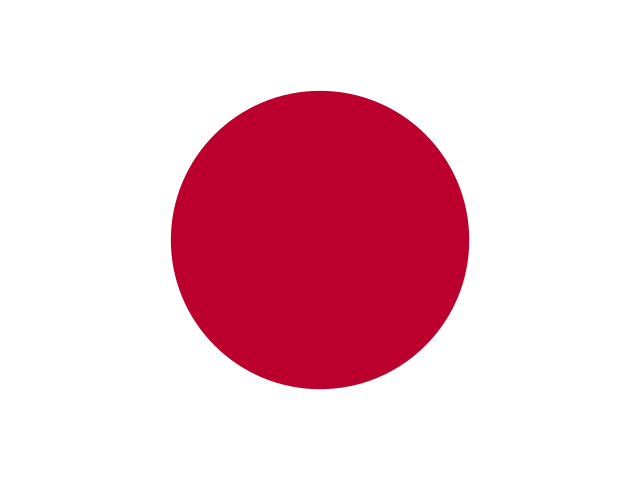
Japan38/100
“Two nations united by culinary self-regard, UNESCO credentials, and a shared suspicion of the foreigner — yet divided by everything else, including how they apologise for it.”
Breakdown & sources
Work-Life Balance42
France treats the lunch break as intangible cultural heritage; Japan treats overwork as a form of respect — both are in crisis, but they are in entirely different crises.
Hierarchy & Formality35
Japan deploys hierarchy through elaborate choreographies of bowing and apology, while France deploys it through the waiter who heard you perfectly and chose not to.
Communication Style28
One country makes you feel stupid on purpose; the other makes you feel stupid by accident and then apologises at length — the outcome is identical, the intent is not.
Punctuality Culture44
Japan's trains run to the second and come with formal apologies for thirty-second delays; France's relationship with punctuality is best described as a working hypothesis.
Social Bonding41
The French bond over a two-hour sit-down lunch requiring eye contact and 'Santé'; the Japanese bond over the fact that solo dining is structurally accommodated and no one need speak at all.
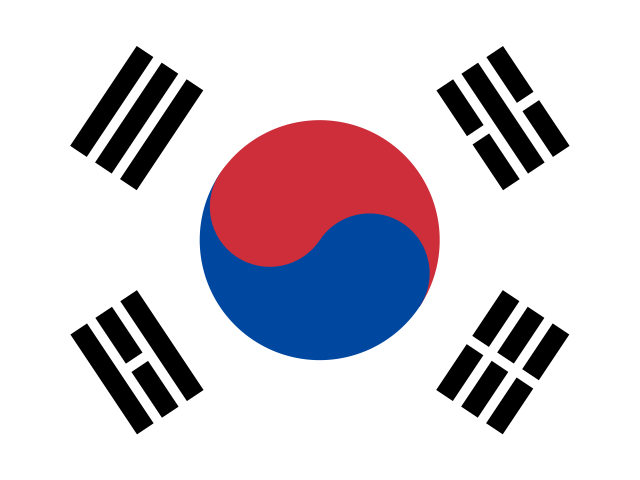
South Korea38/100
“Two nations that treat leisure with the utmost seriousness and absolutely no shared definition of what that word means.”
Breakdown & sources
Work-Life Balance35
France legislates idleness into the calendar; South Korea schedules leisure with the same rigour it applies to a quarterly earnings call — both are devoted to the weekend, but one considers an unplanned Sunday a triumph and the other considers it a wasted opportunity.
Hierarchy & Formality48
Both cultures maintain their own precise codes of social propriety — one expressed in the unspoken rule that you do not rush a Sunday lunch, the other in the unspoken rule that you do not arrive at a hiking trail in casual trainers.
Communication Style42
France considers being unreachable on Sunday a right enshrined by civilization itself; South Korea considers a well-captioned café post an entirely reasonable form of weekend correspondence.
Punctuality Culture40
The French weekend starts slow and deliberately resists scheduling, while South Korea's Saturday itinerary — café one, café two, mountain, dinner — runs with the quiet efficiency of a regional rail timetable.
Social Bonding44
A long, unhurried market visit followed by a two-hour lunch and a Korean group hike in matching moisture-wicking layers are both genuinely communal experiences, separated only by pace, documentation, and the question of whether a selfie stick belongs at the table.
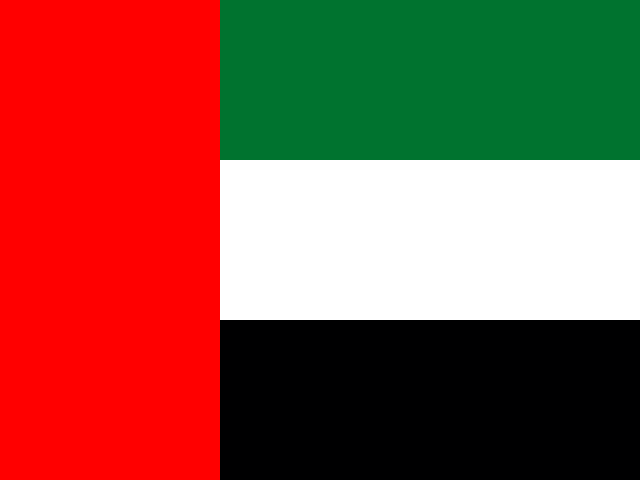
UAE38/100
“Two nations united by a love of shopping and divided by everything that word means — one has turned commerce into climate-controlled civilization, the other treats the correct greeting at a cheese counter as a human rights issue.”
Breakdown & sources
Work-Life Balance35
France legislates leisure as a birthright; the UAE builds ski slopes inside shopping centres so you never have to go home — different philosophies of escape, similarly non-negotiable.
Hierarchy & Formality42
Both cultures demand correct ritual before any transaction proceeds — France requires a 'Bonjour,' the UAE requires modesty compliance — the forms differ, but the consequences of ignoring them are equally chilly.
Communication Style33
The UAE opens with a price that is merely an opening bid in the souk and a firm non-negotiable in the mall; France opens with a greeting and considers everything after it secondary — two countries where what you say first determines whether you're taken seriously at all.
Punctuality Culture40
France keeps Sunday afternoon and most of Monday closed on principle; the UAE keeps the mall open until midnight — both are punctual, just to entirely different clocks.
Social Bonding41
The French bond over a Sunday morning marché queue treated as a spiritual exercise; Emiratis bond over a full-day mall excursion treated as a civic duty — communion is available in both countries, provided you show up correctly dressed.
USA38/100
“Two nations technically sharing a calendar week, one of which has legislated the right to do nothing while the other has monetised the concept of rest and sold it back to itself at a $19 markup.”
Breakdown & sources
Work-Life Balance15
France treats leisure as a constitutional right; America treats it as content.
Hierarchy & Formality50
Insufficient data from the articles to score with precision — a rare moment of editorial restraint.
Communication Style40
The French do not 'grab a quick bite' and the Americans do not linger at the table, which makes every shared meal a minor diplomatic incident.
Punctuality Culture45
America books brunch three weeks out and waits 45 minutes anyway; France schedules Sunday lunch for noon and expects you to still be there at dusk.
Social Bonding42
One culture bonds over a four-hour apéro that becomes a meal that becomes an afternoon; the other bonds over a car park cookout and calls it a festival — both are sincere, neither is translatable.