← Compatibility Index
 Portugal
Ranked against every country we've compared Portugal to, highest compatibility first.
Iceland72/100
“Two nations that have independently concluded anonymity is a character flaw, and will make it everyone's business to correct yours.”
Breakdown & sources
Work-Life Balance68
Both cultures treat life outside the office as seriously as life inside it, though Iceland does so with geothermal efficiency and Portugal with a month-long saint's festival that technically counts as community infrastructure.
Hierarchy & Formality70
Neither country is particularly interested in formal distance — Iceland because there are too few people to maintain it, Portugal because the neighbour already knows your business anyway.
Communication Style74
Both operate on the understanding that information is communal property; in Iceland it travels at swimming-pool speed, in Portugal at padaria speed, which is marginally slower but comes with better pastries.
Punctuality Culture58
Iceland's mandatory pre-pool shower suggests a people who take procedural compliance seriously; Portugal's month-long festas suggest a people for whom the concept of 'on time' is more of a philosophical starting point.
Social Bonding88
An Icelander who invites you to their family's summer house twenty minutes after correcting your breaststroke will feel entirely at home on a Lisbon street where the residents' association already knows your emotional state from your expression at the bakery.

Colombia62/100
“Two nations united by a cheerful indifference to published timetables and a shared conviction that the commute is something that simply happens to you, like weather or tax.”
Breakdown & sources
Work-Life Balance68
Both cultures treat the working day as a suggestion bookended by considerably more important meals, though Portugal insists on calling this philosophy and Colombia simply calls it Tuesday.
Hierarchy & Formality60
Insufficient evidence from the published articles to score with precision, which is itself a compatible trait — neither country appears to have written the memo.
Communication Style65
Both nations communicate delays, cancellations, and general infrastructural disappointment with the serene, unhurried calm of someone who has already made peace with it.
Punctuality Culture55
Lisbon's metro is reliably late 'in the specific Portuguese way where nobody apologises,' while Bogotá's TransMilenio operates on a schedule best described as aggressive suggestion — a match made in a waiting room.
Social Bonding63
Shared suffering is a universal bonding mechanism, and both cities have generously ensured their commuters will have plenty of it to discuss over dinner.
Vietnam62/100
“Two nations that have independently concluded privacy is overrated and that the ideal living arrangement involves your neighbours knowing your salary, your schedule, and the precise contents of your refrigerator — though one arrived at this conclusion via centuries of Alfama stonework and the other via a motorbike-width alley and sheer spatial necessity.”
Breakdown & sources
Work-Life Balance58
Both cultures embed daily life into community infrastructure — the café, the hẻm stall — but Portugal's leisurely café rhythm and Vietnam's compressed, industrious alley micro-economy suggest they agree on the destination while disagreeing sharply on the pace.
Hierarchy & Formality65
Portugal's bairro trust is earned through time and consistent presence, while Vietnam's hẻm requires deliberate deference to elders and regulars — different mechanisms, recognisably similar conclusions about who is owed respect and why.
Communication Style72
Both cultures communicate in the high-context, everyone-already-knows register — the Portuguese neighbour who learned of your job change before you announced it and the hẻm elder who clocked your unusual Tuesday absence are, functionally, the same information network in different architecture.
Punctuality Culture55
Neither culture has placed punctuality at the centre of its social contract, though Vietnam's hẻm economy — where a noodle stall opens at 5 a.m. because that is simply when it opens — introduces a brisk, commerce-driven timekeeping that Lisbon's bairro café does not particularly share.
Social Bonding68
The methods are almost endearingly parallel — daily greetings, loyalty to local vendors, attendance at communal events, and a shared, unspoken understanding that your personal affairs are a neighbourhood resource — making this the dimension where Portugal and Vietnam are most unnervingly alike.

Ghana62/100
“Two cultures that refuse to be hurried on a weekend, separated only by whether the occasion involves a fantasy coffin or a third helping of bacalhau.”
Breakdown & sources
Work-Life Balance68
Both nations treat the weekend as non-negotiable sacred time; they simply disagree on whether it should be spent mourning jubilantly or lunching indefinitely.
Hierarchy & Formality58
Ghana's strict funeral dress codes and family-greeting protocols suggest a formality that Portugal's unbothered café-lingering culture only partially shares.
Communication Style65
Ghana's 'small small' and Portugal's 'just coffee' are functionally identical phrases in that neither means what it says and both will cost you an afternoon.
Punctuality Culture70
Neither country has made peace with the clock — Ghana on spiritual grounds, Portugal on aesthetic ones — which is, at minimum, a foundation for mutual understanding.
Social Bonding66
Both cultures treat social invitations as full-commitment, multi-hour affairs where leaving early is a diplomatic incident requiring careful management.
Malaysia54/100
“Two countries that both treat hospitality as a national value, but where one has started filing restraining orders against its own tourists while the other will throw in free laundry if you seem like you might stay.”
Breakdown & sources
Work-Life Balance55
Insufficient data from the source material to score with precision — though any country that enforces strict quiet hours and any country that negotiates rental terms over WhatsApp at 11pm are clearly operating on different clocks.
Hierarchy & Formality50
Portugal's city councillors issue formal regulatory frameworks with the gravity of constitutional amendments; Malaysia's apartment managers close deals in a chat thread — both are authoritative, just in entirely different registers.
Communication Style48
Portugal communicates its displeasure through legislation and the pained expression of a Lisbon councillor; Malaysia communicates its enthusiasm through a WhatsApp negotiation that ends with complimentary laundry — directness, it turns out, comes in many forms.
Punctuality Culture57
Limited direct evidence from the source material, though a country that enforces noise complaints 'strictly' and a country where posted rates are suggestions rather than facts suggest meaningfully different relationships with rigidity.
Social Bonding58
Malaysia bonds with strangers by discounting their third month on the spot; Portugal bonds with strangers by gently explaining that there are too many of them already — warm in spirit, if not always in practice.

Kenya52/100
“Two nations equally committed to the ritual dignity of buying vegetables, but utterly divided on whether that dignity requires a queue or a counteroffer.”
Breakdown & sources
Work-Life Balance58
Both cultures treat the workday as something that bends around life rather than the other way around, though Kenya's flexibility is improvised while Portugal's is legislated by Sunday closing hours.
Hierarchy & Formality50
Kenya defers to the vendor who knows the price and Portugal defers to the vendor who controls the produce — different authority structures arriving at the same power dynamic.
Communication Style38
Nairobi treats commerce as theatre requiring active participation; Lisbon treats it as a solemn civic procedure requiring silence and a numbered ticket.
Punctuality Culture55
Neither country will penalise you for being late, but Portugal will make you wait your turn anyway, which amounts to roughly the same thing.
Social Bonding60
Both cultures build genuine human connection through the ritual of buying food, even if one does it through cheerful confrontation and the other through quiet, mutual, apron-clad judgment.

Thailand52/100
“Two nations united by warm smiles, indirect corrections, and the shared conviction that your attempt at their language was adorable — though only one of them will accidentally insult your mother if you get the pitch wrong.”
Breakdown & sources
Work-Life Balance58
Both cultures maintain a certain philosophical resistance to urgency, though Portugal achieves this through Mediterranean fatalism and Thailand through a smile that declines to confirm anything is actually scheduled.
Hierarchy & Formality55
Portugal tracks formality through its tu/você distinction while Thailand offloads the same anxiety onto the wai — different mechanisms, identical underlying anxiety about getting the social register wrong.
Communication Style44
Portugal communicates indirectly by switching to English the moment you embarrass yourself, while Thailand communicates indirectly by laughing warmly until someone eventually explains what you actually said.
Punctuality Culture55
The available evidence suggests both nations approach deadlines with the same unhurried confidence, though no one in this pairing's published reporting was apparently in enough of a hurry to find out.
Social Bonding62
Both cultures bond most effectively over your linguistic failures — Portugal with stoic sympathy, Thailand with table-wide laughter — which is either a compatibility or a recurring humiliation, depending on your ego.
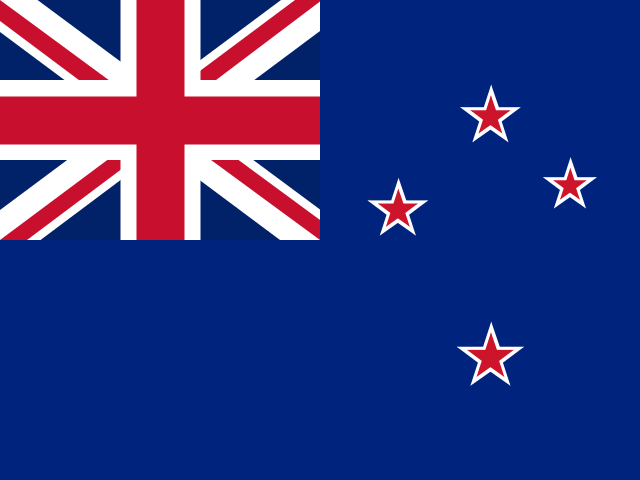
New Zealand52/100
“Two nations united by a love of the weekend and divided by everything they think should happen during it — one reaches for its hiking boots, the other for a second carafe.”
Breakdown & sources
Work-Life Balance63
Both cultures are sincerely committed to not working on weekends; they have simply filed irreconcilable paperwork on what 'not working' means.
Hierarchy & Formality55
The articles offer no boardroom comparisons, but a culture that queues contentedly for pastéis de nata and one that summits things before breakfast suggest subtly different relationships with patience and deference.
Communication Style58
Portugal's silence-as-contentment doctrine would unsettle a New Zealander trained to fill every pause with cheerful practicality, though neither nation appears to be shouting.
Punctuality Culture38
New Zealand books its trailheads in advance; Portugal explicitly advises against scheduling anything requiring punctuality on a Sunday morning — a philosophical difference that goes well beyond alarm clocks.
Social Bonding47
The extended Portuguese family lunch and the New Zealand bach weekend are both sacred bonding rituals, distinguished mainly by whether they involve cutlery or a wet tent.
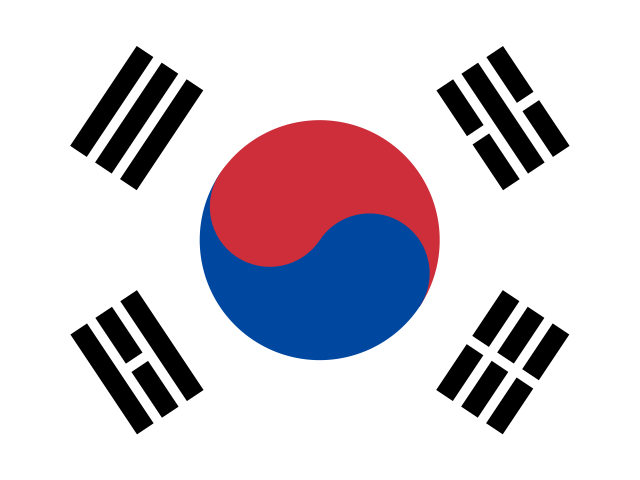
South Korea48/100
“Two cultures that will absolutely know your business, by entirely different administrative means.”
Breakdown & sources
Work-Life Balance35
Portugal treats the evening as sacred personal time; South Korea treats it as an extension of professional obligation — a philosophical disagreement with real consequences for anyone attempting to live in both.
Hierarchy & Formality38
Portugal's community hierarchy runs on accumulated decades of informal seniority (Senhora Fernandes simply knows more than you), while Korea's is codified, posted in the elevator, and enforced by a residents' association that does not negotiate.
Communication Style55
Both cultures will tell you things you didn't ask to know about yourself — Portugal through warm, unsolicited commentary on your relationship status, Korea through a laminated notice about your recycling violations.
Punctuality Culture42
The danji's rubbish disposal schedule is not a suggestion; the Lisbon bairro festa will start when it starts, which is after it was supposed to start.
Social Bonding62
Both societies achieve the same outcome — the total impossibility of anonymity — through charmingly opposite methods: one over pastéis de nata at the padaria, the other via a mandatory agenda item at the dong-hoe.

Indonesia47/100
“A pairing in which one side shows up at 9pm with wine and no agenda, and the other has already texted your mother.”
Breakdown & sources
Work-Life Balance55
Both nations resist the Protestant work-ethic sprint, though Indonesia's family obligations mean leisure time is never truly off the clock.
Hierarchy & Formality38
Portugal's casual informality and Indonesia's structured deference to family and tradition occupy meaningfully different rungs of the same ladder.
Communication Style42
Portugal deploys playful verbal teasing as intimacy; Indonesia deploys polite formality as respect — both are sophisticated systems, neither translates cleanly.
Punctuality Culture62
A rare point of solidarity: neither country has issued a formal apology for arriving late, and neither intends to start.
Social Bonding36
Portugal bonds over unplanned rooftop conversations at midnight; Indonesia bonds over structured family introductions with implicit timelines — both are warm, neither is the same warmth.
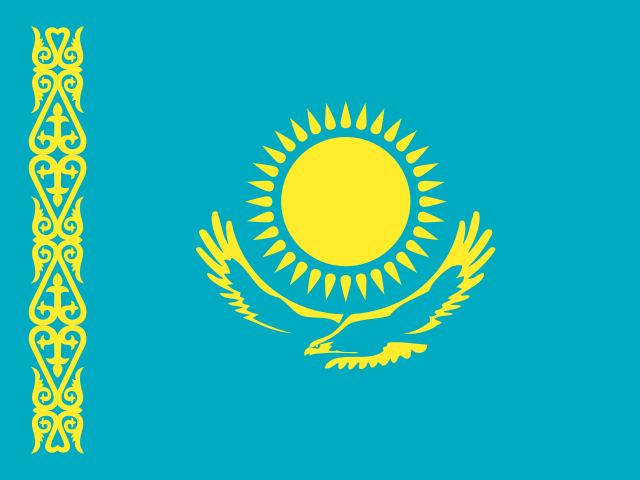
Kazakhstan41/100
“Two nations united by their contempt for the customer who is in a hurry, divided by whether that customer is expected to fight back or simply surrender.”
Breakdown & sources
Work-Life Balance48
Kazakhstan treats daily commerce as competitive sport requiring stamina; Portugal treats it as leisure requiring patience — both are exhausting, but in ways that would baffle the other side.
Hierarchy & Formality52
Both cultures demand you acknowledge the vendor as a human being before conducting any transaction, which is either heartwarming or inefficient depending on how badly you need sardines.
Communication Style35
Kazakhstan expects sharp, strategic counter-offers delivered with confidence; Portugal expects reverential silence while a fishmonger narrates lunar calendars — the Kazakh grandmother would not last four minutes.
Punctuality Culture38
Portugal's mercado closes when it closes and opens when it opens, and Sunday is non-negotiable; Kazakhstan's bazaar at least has the decency to stay open while actively overcharging you.
Social Bonding55
Both countries insist on small talk before commerce — the Kazakh vendor wants respect before reducing the price, the Portuguese vendor wants appreciation before revealing which sardines are actually worth buying.
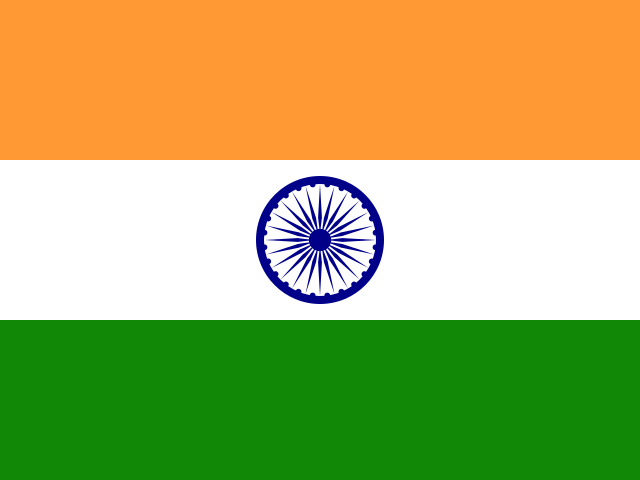
India38/100
“A union of two cultures that have each, in their own way, made peace with chaos — but whose chaos operates at entirely incompatible frequencies.”
Breakdown & sources
Work-Life Balance45
Both cultures resist the tyranny of the clock, though India does so at volume while Portugal does so over a second espresso.
Hierarchy & Formality42
India's hierarchies are loud and load-bearing; Portugal's are quieter but no less present, dressed in the polite fiction of everyone just taking their time.
Communication Style28
India communicates by filling every available silence with sound; Portugal considers this a form of aggression dressed as conversation.
Punctuality Culture55
Both nations have made a philosophical commitment to treating deadlines as suggestions, which is perhaps the one honest thing they share.
Social Bonding40
Indians bond through cheerful, high-density proximity; Portuguese bond through unhurried intimacy — both warm, but one requires a personal-space waiver the other has never heard of.
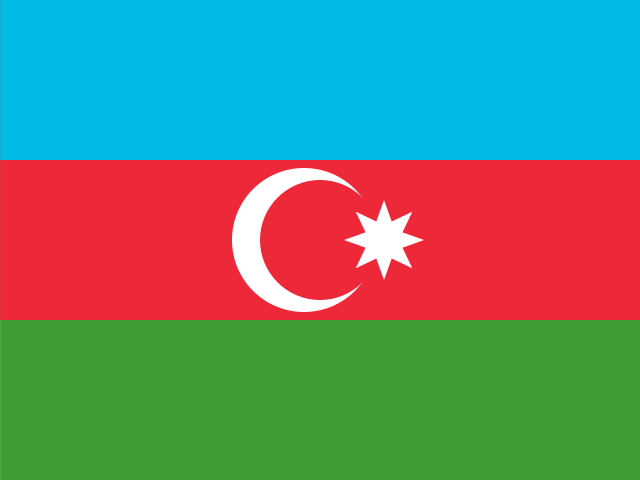
Azerbaijan38/100
“Two countries united only by the certainty that neither will apologise for being exactly as they are — one runs on marble discipline, the other on scenic fatalism.”
Breakdown & sources
Work-Life Balance42
Azerbaijan treats the commute as a rehearsal for productive efficiency; Portugal treats it as an opportunity to make peace with impermanence — compatible only in the sense that both eventually arrive.
Hierarchy & Formality35
Baku's unspoken etiquette around elders and personal space suggests a social order that does not require signage, while Lisbon's relationship with rules appears to be one of fond, mutual non-interference.
Communication Style40
One culture is described as offering precisely no small talk on its chandelier-flanked metro; the other communicates primarily through timetables it has no intention of honouring.
Punctuality Culture18
Azerbaijan's metro runs with the discipline of a Swiss watch factory; Portugal's bus schedule is, per the reporter's own generous assessment, a mood board — a pairing that would test the patience of even the most philosophical Swiss watchmaker.
Social Bonding44
Azerbaijani commuters bond through shared, wordless adherence to firm social codes; Portuguese commuters bond through the collective shrug of a bus that was never really coming.